
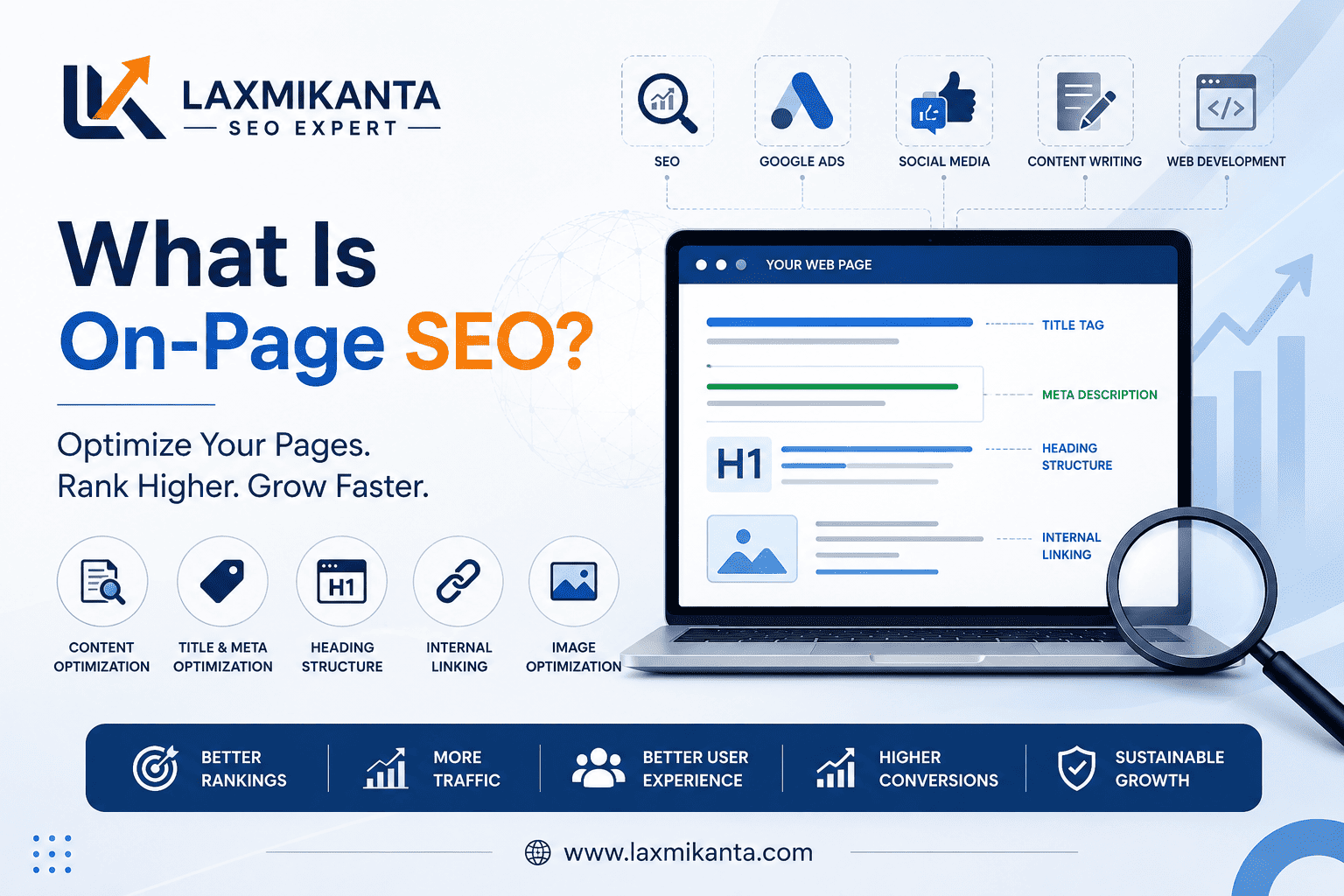
On-page SEO is the process of improving the parts of a webpage that you can control so search engines and users can understand it better. It includes the page’s content, title, headings, meta description, internal links, images, and overall structure of website.
What Is On-Page SEO? A Simple Guide for Beginners
If you want your website to rank higher on Google, simply publishing content is not enough. You also need to optimize each page so search engines can clearly understand what it is about. That is where on-page SEO comes in.
On-page SEO refers to the process of improving elements on a webpage to help it rank better in search results and bring in more relevant traffic. This includes the content itself, title tags, headings, meta descriptions, image alt text, internal links, and page structure.
Why On-Page SEO Matters
On-page SEO helps search engines understand the topic and purpose of your page. It also helps users have a better reading experience, which can improve engagement and conversions
A well-optimized page can:
- Rank for the right keywords.
- Make content easier to read.
- Improve click-through rates.
- Help search engines crawl and understand your site better.
Important On-Page SEO Elements
- Title tag
The title tag is one of the most important on-page ranking signals. It should clearly describe the page and include the main keyword naturally. - Meta description
A strong meta description can improve clicks from search results by giving users a clear idea of what the page offers. - Headings
Use headings like H1, H2, and H3 to organize content. This makes the page easier to scan for both users and search engines. - Content quality
Write useful, original, and topic-focused content. Search engines prefer pages that fully answer the user’s search intent. - Internal links
Link to related pages on your site to help users explore more content and help search engines understand page relationships. - Images and alt text
Add relevant images and describe them with alt text so search engines can understand them and users get a better experience.
On-Page SEO vs Off-Page SEO
On-page SEO focuses on improvements made inside the website, while off-page SEO focuses on external factors such as backlinks and brand signals. Both are important, but on-page SEO is often the foundation because it helps ensure each page is properly optimized before promotion.
Simple On-Page SEO Checklist
Before publishing any page, check these points:
- Use one main keyword naturally in the title.
- Write a clear H1 heading.
- Add useful H2 and H3 subheadings.
- Include the keyword and related terms in the content.
- Add internal links to related pages.
- Optimize images with descriptive alt text.
- Write a compelling meta description.
- Make sure the content solves a real user problem.
Common On-Page SEO Mistakes
Some common mistakes include:
- Stuffing too many keywords.
- Using weak or duplicate titles.
- Writing thin content.
- Ignoring internal linking.
- Leaving images without alt text.
Final Thoughts
On-page SEO is one of the most practical parts of SEO because it gives you direct control over how each page is optimized. If you improve your titles, headings, content, links, and image optimization, you create a stronger base for rankings and traffic.